Top 10 Wealthiest Shipowner in the World 2026


Key Takeaways
Klaus-Michael Kuehne leads with $42.5 billion through Kuehne + Nagel's global logistics empire spanning air, sea, and contract freight operations
Top 10 shipowners collectively control fortunes exceeding $150 billion, dominating container shipping, tankers, and specialized vessel markets worldwide
CMA CGM's Saadé family pioneered sustainability in shipping with $23.2 billion fortune through alternative fuels and carbon-neutral initiatives
Asset tokenization and fractional ownership democratize maritime investment, lowering traditional multi-million dollar entry barriers
Next generation billionaires emerge through technology adoption, environmental compliance, and integrated supply chain capabilities
I've spent fifteen years in commercial shipping, broking dry bulk charters, working sale and purchase transactions, and advising shipowners on fleet strategy. In that time, I've watched fortunes get built and wrecked in roughly equal measure.
The people on this list didn't get wealthy by being lucky once. They got wealthy by understanding something most people don't: shipping is a capital cycle business, not a trading business. The money is made by owning assets when they're cheap and holding them when rates recover, not by trying to time individual voyages.
Every name below got there through some version of that discipline. The details differ. The underlying logic doesn't.
Quick List: Top 10 Wealthiest Shipowners (2026)
Klaus-Michael Kuehne – $42.5B (Kuehne + Nagel)
Rodolphe Saadé & Family – $23.2B (CMA CGM)
Gianluigi Aponte – $21.1B (MSC)
Eyal Ofer – $20.4B (Zodiac Maritime)
Idan Ofer – $19.7B (Quantum Pacific Shipping)
John Fredriksen – $9.2B (Frontline Ltd.)
Maersk Family – $6.1B (A.P. Moller-Maersk)
Maria Angelicoussis – $7.5B (Angelicoussis Group)
Ali Riza Yildirim – $3.4B (Yildirim Holding)
George Economou – $5.3B (TMS Group / DryShips)
Net worth figures sourced from Forbes 2026 Billionaires List and publicly available industry reports.
The Foundation of Maritime Wealth: Understanding the Shipping Industry's Power
The shipping sector stands as one of the most capital-intensive yet rewarding industries in the world. Every container ship, oil tanker, or bulk carrier represents not just transportation capacity, but a strategic asset capable of generating substantial returns when market forces align favorably. This unique characteristic has created opportunities for visionary entrepreneurs to build massive fortunes through:
Strategic fleet expansion during market downturns when vessel prices are low
Diversification across shipping segments including containers, tankers, and specialized carriers
Vertical integration encompassing logistics, ports, and supply chain management
Geographic expansion to capitalize on emerging trade routes and markets

The Elite Circle: Top 10 Wealthiest Shipowners Shaping Global Commerce
1. Klaus-Michael Kuehne - The Logistics Visionary ($42.5 Billion)

Kuehne is the wealthiest person on this list, and he doesn't own many ships. His fortune is a logistics story.
He inherited Kuehne + Nagel, a Swiss freight forwarding company his grandfather founded in 1890, and transformed it into one of the world's largest third-party logistics businesses, air freight, sea freight, contract logistics, and road transport across six continents. The company doesn't own significant vessel capacity. It brokers space on other people's ships and charges clients for coordination and reliability.
That margin, at global scale across millions of annual shipments, is where $42.5 billion comes from. He also holds a major stake in Hapag-Lloyd, which gives him direct container shipping exposure on top of the logistics base.
From a commercial shipping perspective, Kuehne + Nagel is one of the most powerful cargo owners in the world, a company that can direct enormous cargo volumes toward or away from any given operator. That kind of market influence, separate from vessel ownership, is its own form of industry power.
2. Rodolphe Saadé and Family - Sustainability Leaders ($23.2 Billion)

CMA CGM generated $55.5 billion in revenue in 2026. It's the world's third-largest container line by capacity, behind MSC and Maersk, and has been one of the most acquisitive shipping companies of the last decade, buying CEVA Logistics, launching CMA CGM Air Cargo, and building a portfolio of terminal stakes globally.
Rodolphe Saadé took over from his father Jacques, who founded CMA in Marseille in 1978, and has pushed the business hard into end-to-end logistics. The deliberate logic is the same as Maersk's: if you control only the ocean leg, you're always at risk of being squeezed by freight rate cycles. If you control the full supply chain, you have pricing power across all legs.
The LNG-powered vessel programme was a significant bet. CMA CGM was among the first container lines to order large LNG-fuelled ships at scale. Whether that proves economically right depends on where LNG bunker prices settle relative to conventional fuel over the next decade, that's genuinely uncertain. But the fleet is newer and cleaner than most competitors.
3. Gianluigi Aponte - The Container Revolution ($21 Billion)
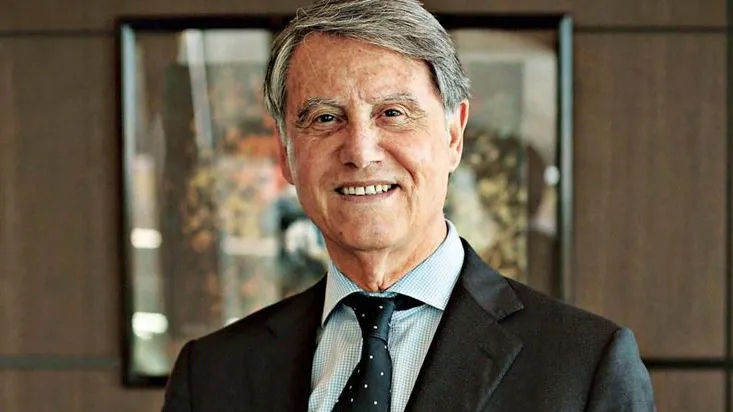
MSC is the most notable company-building story in modern shipping. Aponte founded Mediterranean Shipping Company in Naples in 1970 with one vessel on the Mediterranean. By 2023, MSC overtook Maersk to become the world's largest container line by fleet capacity. Revenue runs around $65 billion. The fleet covers over 500 ports in 155 countries.
The company is private, family-owned, and Geneva-based. It publishes almost no financial data voluntarily. What's documented: MSC grew faster than any competitor during the post-pandemic vessel ordering surge, focused on emerging market routes that other lines considered secondary, and kept corporate costs lean relative to fleet size.
I've watched MSC's approach to the S&P market closely over the years. They were consistently buyers when rates were low, acquiring second-hand tonnage when others were either holding back or restructuring. That discipline in the asset cycle, combined with the network effects of being the world's largest container operator, is what built Aponte's fortune.
The unanswered question is succession. MSC has never been public and Aponte is in his early 80s. What happens when the family transitions ownership is genuinely unknown.
4. Eyal Ofer - Maritime Diversification Master ($20.4 Billion)

Eyal Ofer runs Zodiac Maritime, one of the world's largest privately held shipping groups, alongside his broader Zodiac Group holding company. The fleet spans tankers, bulk carriers, and container vessels, genuinely diversified across vessel types in a way that most owners aren't.
His approach to the S&P market has historically been opportunistic: buying vessels at cycle lows, running them on medium-term charters, and selling when valuations peak. It's the same logic that underlies most shipping wealth, but Ofer applies it across multiple segments simultaneously, which smooths the volatility.
The Global Holdings real estate portfolio, major properties in London, New York, and Tel Aviv, gives him a balance sheet that can absorb shipping downturns without forcing distressed asset sales. That financial resilience is itself a competitive advantage: owners who need to sell at cycle lows hand money to those who can wait.
5. Idan Ofer - Technology and Sustainability Pioneer ($19.7 Billion)

Idan Ofer, Eyal's brother, controls Quantum Pacific Shipping and has broader investment interests across technology, clean energy, and electric vehicles. His shipping exposure is through Quantum Pacific, a fleet of tankers and bulk carriers, and stakes in listed shipping companies.
He's taken more public positions on decarbonisation than most shipowners, backing hydrogen and ammonia fuel infrastructure and clean technology companies. Whether the shipping industry moves to those fuels in the timeframe he's backing is an open question, the economics of hydrogen and ammonia as ship fuels are still challenging at scale. But the directional bet on tightening environmental regulation seems right, regardless of which specific fuel wins.
6. John Fredriksen - The Tanker Market Master ($9.2 Billion)

Fredriksen is the most studied shipowner alive, and the one whose career most clearly illustrates how shipping wealth is built and preserved across cycles.
He made his initial fortune in crude oil tankers during the 1970s and 80s, a period of high volatility and, for those willing to operate under Iranian flags during the revolution, notable margins. He restructured multiple times, moved his legal base to Cyprus, and consistently came out of downturns owning more market share than when he entered them.
Today he controls Frontline, one of the world's largest publicly listed tanker companies, along with SFL Corporation (ship leasing) and several other entities. The tanker market has been strong since 2022, with Russian oil trade disruptions extending voyage distances and tightening vessel supply. Frontline has been a direct beneficiary.
He's 79. His twin daughters Kathrine and Cecilie have been taking on increasing board responsibility across his companies over the last five years. That succession process is ongoing.
7. The Maersk Family - Century-Long Legacy ($6.1 Billion)

The Maersk family's remarkable $6.1 billion wealth (Forbes, 2026) through A.P. Moller-Maersk Group represents more than a century of unparalleled maritime leadership, establishing them as true pioneers who fundamentally transformed global commerce since their founding in 1904. Their extraordinary legacy demonstrates how visionary thinking, combined with adaptive leadership across multiple generations, can build enduring wealth that withstands the test of time.
The family pioneered the modern containerization system that revolutionized global shipping efficiency, successfully navigated through two world wars, economic depressions, and multiple industry transformations, and continues to lead digital transformation initiatives connecting maritime shipping with end-to-end land-based logistics.
The Maersk family's century-long success exemplifies how sustained innovation, strategic adaptation, and commitment to excellence can create lasting maritime empires that define entire industries.
8. Maria Angelicoussis - Specialized Shipping Excellence ($5.8 Billion)

Maria took over the Angelicoussis Group after her father John died in 2022. It's one of the largest private shipping companies in the world: roughly 145 vessels across three subsidiaries. Maran Tankers (crude oil), Maran Gas (LNG), and Anangel Maritime (dry bulk). Combined fleet value is estimated at $17 billion.
Taking over a fleet that size from a founder-owner is not a straightforward transition. John Angelicoussis built the business over forty years with a very specific management philosophy: low debt, long-term charters, extreme operational conservatism, minimal public profile. Maintaining that culture while managing a fleet across three highly cyclical segments requires real discipline.
From where I sit commercially, the Angelicoussis Group's consistency is what stands out. They don't chase the top of the market. They don't over-leverage in good times. They survive bad times with capacity intact, which means they're positioned to buy when others have to sell. Maran Gas in particular has been a strong performer given LNG demand growth since 2022.
Ali Riza Yildirim - Yildirim Holding ($3.4 Billion)

Yildirim heads Yildirim Holding, a Turkish conglomerate with fertiliser production, chrome mining, port operations, and shipping interests. His most significant maritime bet was acquiring a stake in CMA CGM in 2012 when the company was cash-constrained and needed capital during a weak market.
That stake has appreciated enormously as CMA CGM grew from a mid-sized container line into a global major. It's a good example of something I tell clients regularly: some of the best returns in shipping come not from operating vessels but from financing the operators at the right point in the cycle.
The port assets in Yildirim's portfolio are the other interesting piece, port ownership provides commodity-type exposure to trade volumes without the direct freight rate volatility of vessel ownership.
10. George Economou — Dry Bulk & Tanker Strategist ($5.3 Billion)

George Economou, with a fortune of $5.3 billion (Forbes, 2026), is one of the most prominent Greek shipping magnates and a dominant force in the dry bulk and tanker markets through his TMS Group and formerly DryShips. Born in Athens and educated at MIT and Harvard Business School, Economou has built a reputation for contrarian market timing, aggressively acquiring distressed vessels during sector downturns and capitalizing during freight rate cycles.
His fleet has spanned dry bulk carriers, oil tankers, and offshore drilling vessels, making TMS Group one of the most diversified private maritime operators globally. Economou's success underscores how financial acumen and fleet management discipline can generate enduring wealth across multiple shipping segments, and his story represents the next generation of Greek maritime leadership following in the tradition of Onassis and Niarchos.
The Future of Maritime Wealth: Sustainability and Technology
As we look toward the future, the next generation of shipping billionaires will likely emerge from those who successfully navigate:
Environmental regulations: Leading the transition to sustainable shipping practices
Digital transformation: Implementing AI, IoT, and automation technologies
Alternative fuels: Pioneering hydrogen, ammonia, and other clean energy solutions
Supply chain integration: Building comprehensive end-to-end logistics capabilities
What These Fortunes Actually Have in Common
I've looked at this list from a lot of angles, and a few things stand out.
Private ownership is dominant at the top. MSC, Zodiac, Angelicoussis, and Kuehne + Nagel are all privately held. No quarterly earnings pressure means these companies can make 10-year asset decisions without explaining them to public investors. That patience is worth real money in a cyclical industry.
None of them are purely exposed to one freight market. Eyal Ofer spans tankers, bulk, and containers. The Angelicoussis Group spans tankers, LNG, and bulk. Even Fredriksen has leasing alongside tankers. The diversification isn't accidental. It's how you survive the bad years in any single segment.
The S&P market is where the discipline shows. Every name on this list has a track record of buying assets in downturns and holding through recoveries. That sounds obvious, but it requires capital discipline, risk tolerance, and patience that most operators don't sustain across multiple cycles. When I was active in the S&P market, the same buyers consistently showed up at the bottom. They're the ones on this list.
FAQs about Richest Shipping Company
Who are some of the wealthiest shipowners in the world in 2026?
As of 2026, prominent wealthy shipowners include Klaus-Michael Kuehne, Rodolphe Saadé and family (CMA CGM), Gianluigi Aponte (MSC), Eyal Ofer (Zodiac Maritime), Idan Ofer (Quantum Pacific Shipping), and John Fredriksen (Frontline), among others.
How did these shipowners build their massive fortunes?
Their wealth was built through strategic fleet expansion, astute market timing, pioneering new technologies (e.g., containerization), vertical integration in logistics, aggressive acquisitions, diversification into related sectors (e.g., ports, real estate, energy), and navigating market cycles with resilience.
What makes the shipping industry so profitable for its owners?
The shipping industry is highly profitable due to its indispensable role in global trade (carrying 80%+ of goods), the vast scale of operations, the ability to capitalize on fluctuating freight rates, and economies of scale achieved through larger vessels and efficient logistics networks.
What is the net worth of the richest shipowner in 2026?
Klaus-Michael Kuehne leads all shipping-linked billionaires with a net worth of $42.5 billion (Forbes, 2026), primarily through his controlling stake in Kuehne + Nagel.
Who is the owner of Maersk and what is their net worth?
A.P. Moller-Maersk is a publicly listed company. The founding Maersk family retains significant ownership and holds a collective estimated net worth of $6.1 billion (Forbes, 2026).
Which shipping company has the highest revenue in 2026?
MSC leads with approximately $65.3 billion in revenue, followed by CMA CGM at $55.5 billion.
Who is the wealthiest person in shipping in 2026?
Klaus-Michael Kuehne at $42.5 billion, though his wealth is primarily from logistics operations at Kuehne + Nagel. If the measure is direct ship ownership, Gianluigi Aponte of MSC at $21.1 billion is the largest fleet owner.
Is Maria Angelicoussis the richest female shipowner in the world?
Yes. Maria Angelicoussis is the wealthiest female shipowner globally with a net worth of $7.5 billion (Forbes, 2026), leading the Angelicoussis Group's fleet of approximately 145 vessels across bulk, tanker, and LNG segments.
How did MSC become the world's largest container line?
Consistent fleet expansion through second-hand vessel acquisitions during market downturns, focus on emerging market routes that competitors underinvested in, and private ownership allowing long-term decisions without public market pressure.


Ravi Shanker
Co-Founder & CCO, Shipfinex
Ravi Shankar FICS is Co-Founder and Chief Commercial Officer of Shipfinex, and General Secretary of the ICS Middle East Branch. A Fellow of the Institute of Chartered Shipbrokers with extensive experience in ship sale and purchase, chartering, and maritime consultancy, he has previously held senior roles at Maersk Broker and Eastgate Shipping DMCC.


